

Gavi Board meeting underlines commitment to country sovereignty, fragility and health security
Gavi Board meeting underlines commitment to country sovereignty, fragility and health security
Board agrees to maintain ambitious targets for Gavi 6.0, including reaching 500 million children, preventing 8–9 million deaths and further reducing under-five mortality by 10%
Programmatic decisions underline commitment to country leadership and support for fragile and humanitarian contexts
Additional US$ 189 million in support approved for sustainable African vaccine manufacturing, enhancing supply resilience and health security
Decisions include innovations that will help Gavi, countries and health workers deliver on 6.0 targets – such as digital payments for vaccination campaigns and flexible liquidity through the European Investment Bank Frontloading Facility
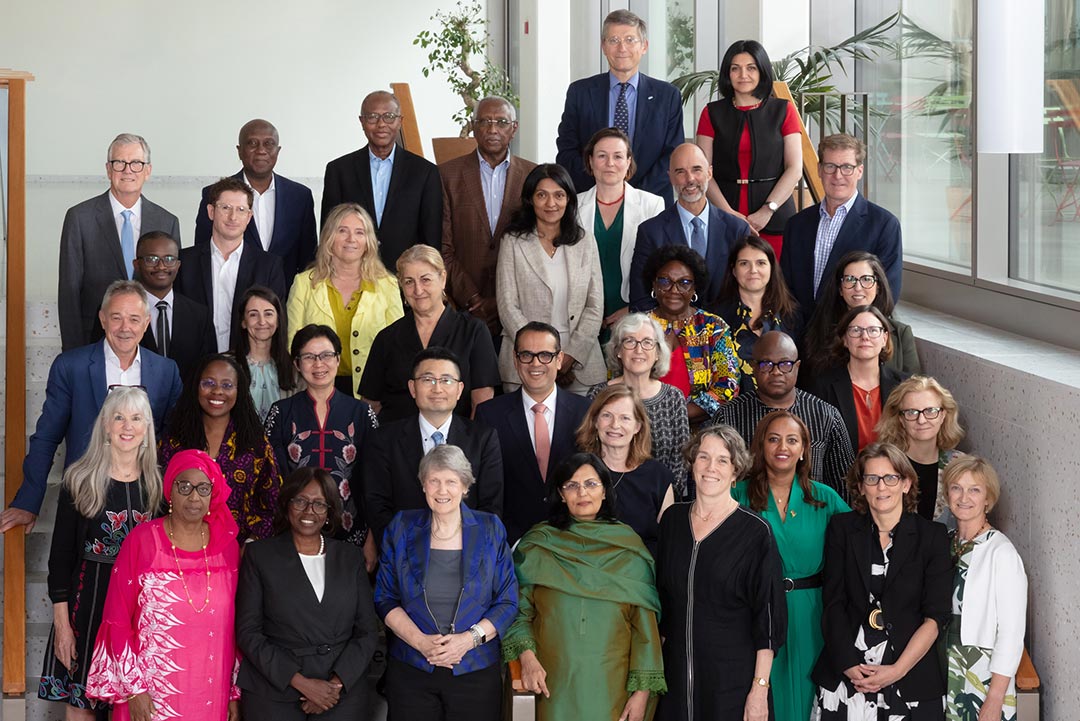
Geneva, 2 July 2026 – The Board of Gavi, the Vaccine Alliance today concluded a two-day meeting, taking a series of decisions that will shape the implementation of its new 2026–2030 strategy (Gavi 6.0). These include an agreement on overall targets for Gavi 6.0, as well as decisions that will boost country ownership and strengthen support for fragile and humanitarian settings. The Board also approved a package of measures to boost Gavi’s African Vaccine Manufacturing Accelerator (AVMA).
As the new strategic period gets underway, the Board also took a final look at the impact and outcomes of the last strategic period from 2021 to 2025. Despite massive disruption caused by the COVID-19 pandemic, the Alliance exceeded the vast majority of its targets: the number of children reached, breadth of protection provided against a range of vaccine-preventable diseases, new vaccine introductions and enabling healthy vaccine markets. The areas deemed off track – reducing the number of zero-dose children and ensuring geographic equity in access – underscore the challenges ahead in reaching the most vulnerable.
“The achievements of the past five years show what is possible with sustained financial and political commitment to immunisation,” said Rt Hon Helen Clark, Chair of the Gavi Board. “They also inspire us to tackle the difficult challenges that lie ahead: building resilience in the face of an increasing risk of outbreaks and pandemics, and dismantling the systemic barriers that have prevented us from reaching the most vulnerable. In this context, the world must continue to prioritise vaccines as one of the most cost-effective investments we can make towards our health, security and prosperity.”
Gavi 6.0 targets finalised
Despite the financially constrained environment within which the Alliance is operating, Gavi’s Board agreed to maintain the ambition to reach 500 million more children, prevent an additional 8–9 million deaths, support a further 10% reduction in under-five mortality and unlock more than US$ 100 billion in economic benefits. Achieving these targets will require continued engagement with sovereign and philanthropic donors to close the funding gap for Gavi 6.0.
In the meantime, innovative financing mechanisms that enable flexible liquidity will be key to delivering Gavi 6.0 in an era of volatility. In this spirit, the Board approved the extension of the European Investment Bank (EIB) Frontloading Facility until end 2026, as well as Gavi’s ability to draw down up to €500 million from the Facility, backed by donor pledges, to ensure continuity of core Gavi activities.
Renewed focus on country ownership, fragile contexts
A number of measures were also passed that will strengthen country ownership of immunisation programmes. These included new policies on country vaccine budgets and co-financing for preventive vaccination campaigns, both of which have been tailored to provide the highest levels of support for countries and contexts with the greatest need. The approach to campaigns will also prioritise, where feasible, digital payments as the default mechanism for health worker payments to avoid delays, misuse and other risks. In line with the principle to prioritise the needs of the most vulnerable, the Board agreed to use cases for its new approach to support fragile and humanitarian contexts. During 6.0, this will include up to US$ 100 million for potential waivers of co-financing requirements as well as the implementation of a “Gavi Resilience Mechanism” – a dedicated fund of US$ 250 million set aside to address unforeseen needs in these settings, including outbreaks not covered by existing mechanisms such as stockpiles.
“Through the Gavi Leap, we placed country ownership and support for the most vulnerable at the heart of our operating model and this week’s Board’s decisions reaffirm this commitment,” said Dr Sania Nishtar, CEO of Gavi, the Vaccine Alliance. “I am especially pleased that, going forward, our immunisation campaigns will mandate digital payments for health workers. From my experience as a minister, I know this will make a huge difference in terms of eliminating misuse and ensuring workers are paid fairly, and on time.”
Enhanced support for African vaccine manufacturing
The Board confirmed enhanced support for sustainable African vaccine manufacturing, approving the use of an additional US$ 189 million – beyond the US$ 1 billion dedicated to Gavi’s African Vaccine Manufacturing Accelerator (AVMA) – to strengthen demand for African-made vaccines and support critical ecosystem strengthening activities. The majority of this financing – US$ 139 million – will be dedicated to buying African-made vaccines, which will simultaneously supplement Gavi’s vaccine procurement budget. An additional US$ 50 million in targeted financing will support three partners – the Africa Centres for Disease Control and Prevention (Africa CDC), African Medicines Agency (AMA) and WHO – who will work together to address barriers to the accelerated development of a vaccine manufacturing ecosystem on the continent.
Appointment and process updates
- Dr Mekdes Daba was appointed Vice-Chair of the Gavi Board, effective 1 October 2026 and until 30 September 2028 – replacing Omar Abdi.
- Henry Gonzalez was appointed as an Unaffiliated Board Member, effective 1 November 2026 and until 31 October 2029, and Chair of the Investment Committee as of 1 November 2026 and until 31 December 2027, in both cases replacing Yibing Wu.
- Dr Mekdes Daba was appointed Chair of the Governance Committee, effective 1 October 2026 and until 31 December 2027 – replacing Omar Abdi.
- Dr Rana Hajjeh was appointed Chair of the Independent Review Committee (IRC) for a three-year term, effective immediately – replacing Dr Rose Leke.
MEDIA CONTACTS
Meg Sharafudeen
+41 79 711 55 54
msharafudeen@gavi.org
Cirũ Kariũki
+41 79 913 94 41
ckariuki@gavi.org
Laura Shevlin
41 79 529 92 87
lshevlin@gavi.org
Collins Weru Mwai
+25 078 783 66 38
cmwai@gavi.org
Eunice Kilonzo-Muraya
+41 76 424 85 03
ekilonzo@gavi.org