

A new era dawns for Gavi, as Board underlines strategic shift towards country ownership and increased support for the most vulnerable
A new era dawns for Gavi, as Board underlines strategic shift towards country ownership and increased support for the most vulnerable
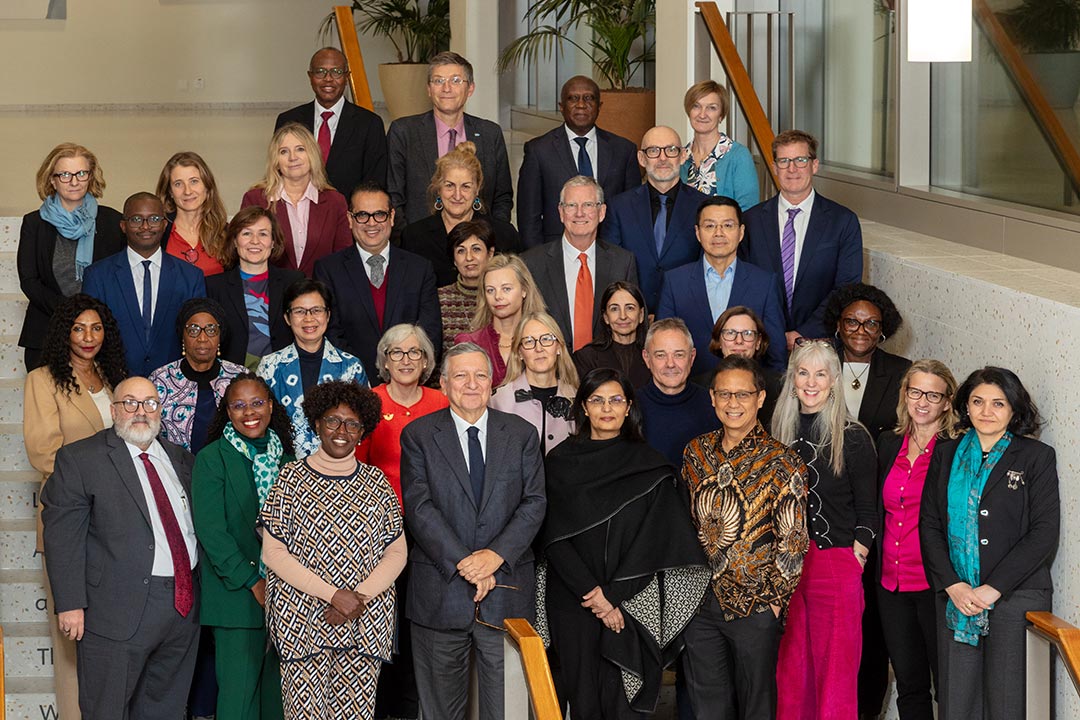
Board decisions place country ownership at the heart of a new operating model, reflecting key elements of the Gavi Leap transformation agenda
Despite funding constraints, Gavi will increase investment in fragile & humanitarian settings by 15%
José Manuel Barroso, Chair of the Gavi Board: “Gavi is in a strong position to protect more children than ever before in its next strategy period.”
Geneva, 4 December 2025 – The Board of Gavi, the Vaccine Alliance today concluded its final meeting before the start of Gavi’s next strategic period from 2026 to 2030 (Gavi 6.0), taking a series of decisions that will further place country ownership at the heart of the Gavi model, increase focus on protecting the most vulnerable despite financial constraints, and support expanding equitable access to key vaccines.
In a major strategic shift that further centers country ownership, nearly 90% of the budget available to Gavi for vaccine procurement in its next strategic period will be allocated directly to countries through “country vaccine budgets”. In a time of financial constraints, countries will have full control of how to optimise and prioritise immunisation programmes per their national strategies and context. By shifting away from rolling applications, country vaccine budgets ensure countries that apply more quickly do not have an advantage in terms of access to Gavi financing. They also mean that all countries have an advance view of resources available for the next five years – and can clearly identify in advance areas to supplement with domestic financing.
“Through the Gavi Leap, we are putting in place an ambitious programme of reforms that will enable countries to have increased agency and ownership over use of resources and decreased administrative burden, which will help our Alliance achieve its programmatic objectives. These changes are well on their way to implementation, with grant management reform – a key pillar of the Gavi Leap – already in place and a year-long Secretariat review that will see our headcount reduce by 33% now complete. I want to thank the Board for their support and guidance as we migrate to our new country-centric operating model and pay tribute to José Manuel Barroso for his leadership as Chair of the Gavi Board over the past five years,” said Dr Sania Nishtar, CEO of Gavi, the Vaccine Alliance.
Building on an earlier decision, Gavi’s Board also finalised an approach to further sharpen the Alliance’s focus on the most vulnerable. Gavi will overall increase its support for fragile and conflict-affected settings by 15% compared to its last five-year strategic period, despite cuts elsewhere. As a result, more than a third of Gavi’s overall funding for countries will be focused on the 25% most vulnerable children. Allocations for country vaccine budgets will also prioritise the lowest income countries with the highest number of deaths amongst children under five. A new agile funding mechanism, called the Gavi Resilience Mechanism, will provide flexible support to countries and partners in fragile and humanitarian settings around the world.
The Board also provisionally approved the addition of nine-valent human papillomavirus (HPV) vaccines to Gavi’s portfolio of offerings to countries – signalling Gavi’s continued commitment to fighting cervical cancer. Gavi’s ambitious push to revitalise the HPV programme has saved more than a million lives. The Board also agreed to add vaccines against tuberculosis, mpox, and respiratory syncytial virus (RSV) to the list of priority antigens supported by Gavi’s African Vaccine Manufacturing Accelerator (AVMA), a financing mechanism dedicated to supporting efforts to build sustainable regional manufacturing on the African continent.
New approach aligns ambitions with available resources
Gavi’s Board also finalised decisions designed to recalibrate its ambitious strategy in line with available resources, which are estimated to reach US$ 10 billion for the next five years.
In order to protect funding for country vaccine budgets, the Board agreed to reduce Gavi’s financial forecast for global stockpiles by US$ 200 million and halve the US$ 200 million budget set aside for vaccine procurement contingencies. It also agreed that US$ 100 million in co-financing waivers for fragile & conflict-affected countries would be financed through a separate pot set aside for funding work in these settings. Building on decisions made at its June 2025 meeting, the Board also agreed on a final set of programmatic choices that will reduce the overall cost of procuring vaccines for the next strategic period. These savings will be achieved by better targeting introductions and campaigns across several vaccine programmes. In June 2025, the Board agreed that Gavi will introduce country co-financing requirements for preventive campaigns, in line with those currently implemented for routine vaccine programmes. To ensure a smooth transition in 2026, the Board has now approved a one-year waiver of these co-financing requirements for preventive campaigns in the lowest-income countries.
Board Chair reflects on an unprecedented period in Gavi’s history
This week also represented the final meeting presided over by Board Chair Professor José Manuel Barroso. Appointed in 2020, Professor Barroso began his term in 2021 and has led the Gavi Board for the entirety of the organisation’s current five-year strategic period. As former President of the European Commission and former Prime Minister of Portugal, Professor Barroso played a critical role in steering Gavi as it delivered on its objectives for Gavi 5.0 while co-leading a historic global emergency vaccine response to the COVID-19 pandemic.
Reflecting on his five years leading Gavi, Prof. José Manuel Barroso, Chair of the Gavi Board, said: “As Gavi nears the end of its fifth strategy period, it is possible to look back at the last five years with a historic sense of accomplishment in a period marked by redefined multilateralism in a multipolar world. More than ever the Gavi model of public private partnership is fit for purpose and can serve as a blueprint for future initiatives. As we look ahead to the next period starting in January, Gavi is in a strong position: not just to protect more children than ever before but to help shape a new model where countries themselves drive their own vaccination agenda – and achieve the Alliance overall goal of protecting our future and strengthening country self-reliance. As my tenure as Chair draws to a close, I want to thank all of Gavi’s stakeholders for the role they have played in our collective success, and wish my successor, the Rt Hon Helen Clark my very best wishes in her new role”.
During its fifth strategic period from 2021 to 2025, Gavi exceeded the target of achieving a 10% reduction in under-five mortality in supported countries, is ahead of schedule to meet the target of 300 million children immunised against a range of diseases, and is on track to reach its targets of 7-8 million deaths averted and US$ 80 billion generated in economic savings. In 2024 alone, Gavi-supported vaccination programmes saved at least 1.7 million lives in 2024, the highest number recorded in a single year. Critical new efforts to introduce malaria vaccines and revitalise HPV vaccination programmes against cervical cancer also achieved their targets. While delivering on these goals, the Alliance also helped the world respond to infectious disease emergencies – supporting an unprecedented number of outbreak response efforts, delivering 2 billion COVID-19 vaccines to 146 countries via COVAX, and enabling recovery of routine immunisation coverage after the pandemic through “the Big Catch-Up” campaign.
MEDIA CONTACTS
Meg Sharafudeen
+41 79 711 55 54
msharafudeen@gavi.org
Cirũ Kariũki
+41 79 913 94 41
ckariuki@gavi.org