

COVID-19 vaccine support
COVID-19 vaccine support
Provides strong protection against severe illness and death from COVID-19, the disease caused by the SARS-CoV-2 coronavirus.
Gavi’s impact
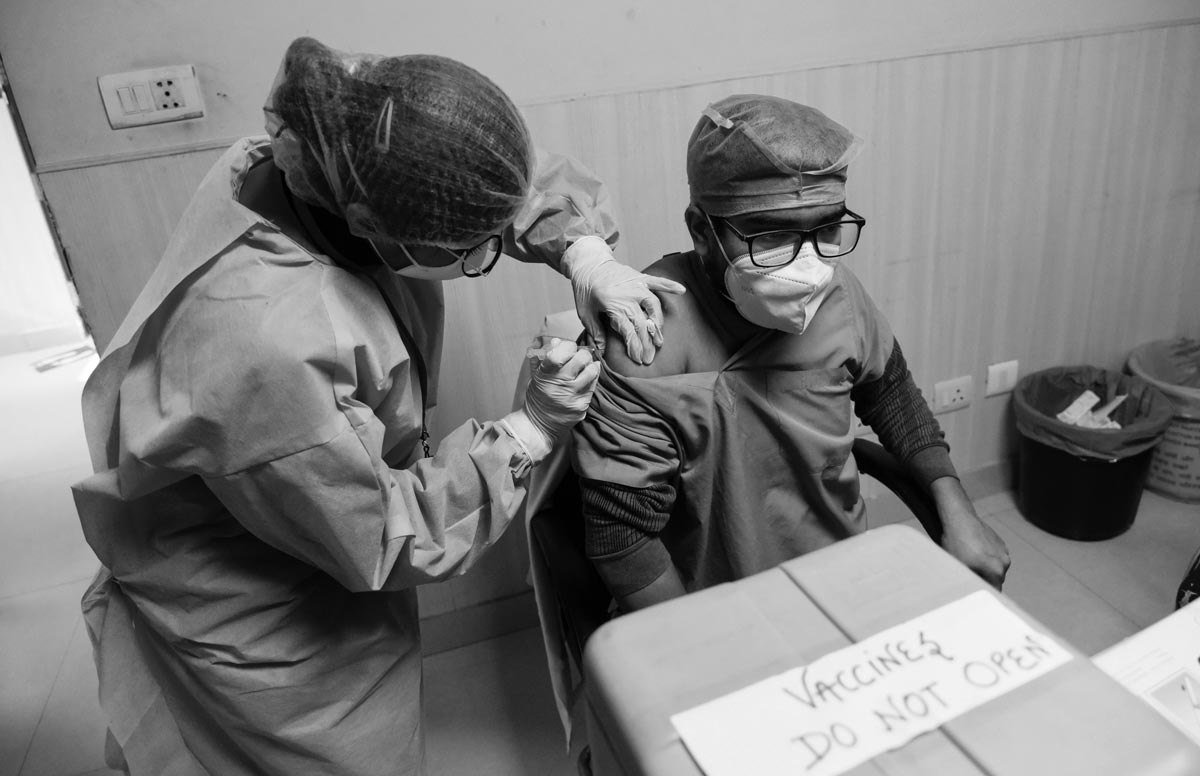
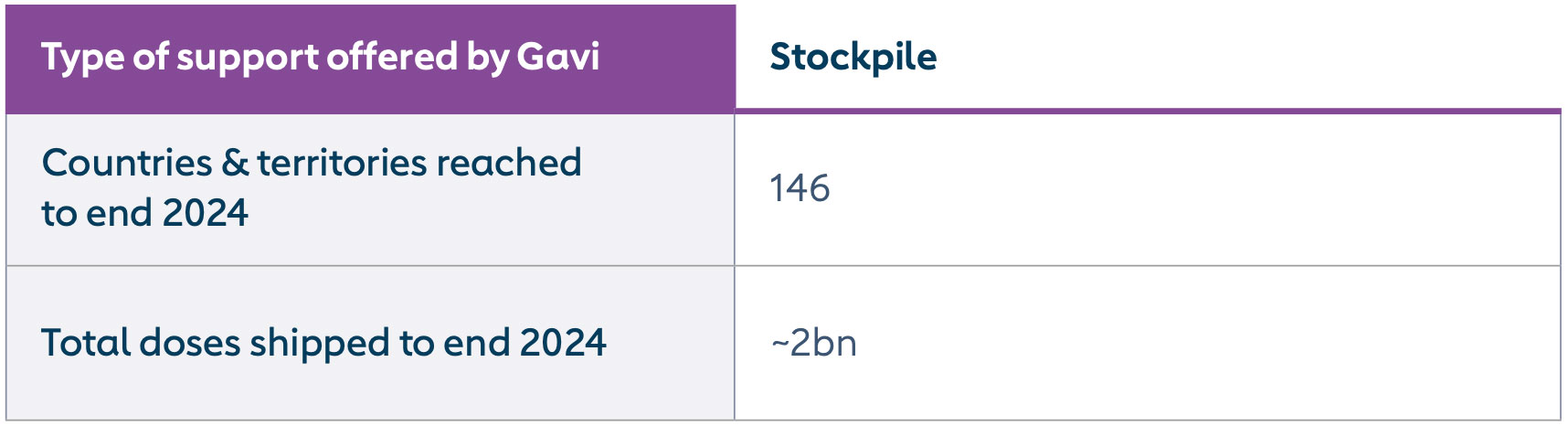
In 2024 alone, Gavi’s COVID-19 vaccine programme shipped 22.8 million COVID-19 vaccine doses to 48 low- and middle-income countries. COVAX closed on 31 December 2023, after having delivered nearly 2 billion COVID-19 vaccine doses and safe injection devices to 146 economies, and is estimated to have averted over 2.7 million deaths in AMC lower-income participating economies.
The Vaccine Investment Strategy (VIS) did not recommend continuing COVID-19 in Gavi’s portfolio from 2026.
FROM GAVI'S 2024 ANNUAL PROGRESS REPORT:
What are the different types of COVID-19 vaccines?
There are four types of vaccines: whole virus, protein subunit, viral vector and nucleic acid (RNA and DNA), each of which protects people, but by producing immunity in a slightly different way.
How safe are COVID-19 vaccines?
Despite the record speed at which they have been developed, COVID-19 vaccines have still been subject to the same checks, balances, and scientific and regulatory rigour as any other vaccine, and shown to be safe.
How did we get COVID-19 vaccines so quickly?
An unprecedented combination of political will, global collaboration and funding have enabled the rapid development of COVID-19 vaccines, without compromising vaccine safety.
Frequently asked questions about COVID-19 vaccines
Why are fully vaccinated people still catching COVID-19?
No vaccine is perfect, so “breakthrough infections”, where people get sick with an infection even after vaccination, are to be expected with any disease. But just how common are they when it comes to COVID-19, and what should you expect if you test positive for SARS-CoV-2 after being fully vaccinated?
Do kids need a COVID-19 vaccine?
New variants have evolved that seem to be able to affect children more, with low- and middle-income countries worst affected. New research is showing vaccines can be effective in children, but they remain at relatively low risk of the disease. While millions of vulnerable people in low- and middle-income countries have yet to have a single dose, it's vital that they remain priorities for vaccine rollouts.
Can antibody tests show if a COVID-19 vaccine is working?
Many COVID-19 antibody tests are not designed to specifically detect antibodies that develop as a result of vaccination, and thus cannot show whether antibodies are of the right quantity or quality for protection against infection or illness.
If I've had COVID-19, do I really need the vaccine?
Vaccines mimic our body's natural response to infection. However while a previous infection does give you some immunity against COVID-19, vaccination gives your body a massive immune boost – including against new variants.
Do we need booster doses?
A number of wealthy nations have decided to press ahead with plans to administer COVID-19 vaccine boosters in the coming months, yet with so many in under-resourced countries still without vaccines, we should be prioritising vaccinating all adults first.
Do COVID-19 vaccines affect fertility or periods?
Anecdotal evidence suggests the vaccine could temporarily affect menstruation, but the effects are short-lived and scientists say there is no evidence that vaccines affect fertility.
- Read more: Do COVID-19 vaccines affect menstruation and fertility?
- Read more: Five things you need to know about COVID-19 vaccines and your period
What is the link between COVID-19 vaccines and myocarditis?
Countries that are now vaccinating adolescents and young adults have seen an unexpected, though very rare, side-effect: heart inflammation.
How long after I get COVID-19 will I test positive?
Testing positive for COVID-19 – even without symptoms – can be disruptive to daily life, but how long should we expect to test positive for?
Does a faint line on a COVID-19 test mean I'm no longer infectious?
Rapid antigen or lateral flow tests can help to identify when someone with COVID-19 is most infectious, but even a faint line should be treated as a positive result.
What happens in Long COVID?
Long COVID has altered the lives of millions of people, all living in the limbo of experiencing COVID-19 symptoms weeks or months after their initial infection, yet not knowing how or when they will recover. Published on International Long COVID Awareness Day, here are ten stories about a condition that we still have much to learn about.
Latest articles about COVID-19
View moreHow George Washington weaponized smallpox inoculation
In 1775, Washington deployed colonial soldiers who had survived smallpox to retake Boston during a city-wide epidemic.

What the UK’s ‘day of reflection’ reveals about COVID memory
Memorials, campaigns and a national day all exist, yet agreement on what should be remembered remains elusive.

Major study suggests transparent communication is key to vaccine uptake
A Lancet study of 1.1 million people suggests that most COVID-19 vaccine hesitancy reflected concrete concerns that faded over time, underscoring the importance of good information and transparent communication.

Have we already forgotten the lessons of COVID-19? We asked an expert in anticipating crises
Bureaucracy, politics and fraying trust in institutions could mean that warnings about the next health crisis fall on deaf ears, says a leading expert.

Major study confirms COVID-19 vaccination does not affect fertility
Extensive population data from Sweden supports the safety of COVID-19 vaccines for women of childbearing age.
Massive four-year study finds no increase in deaths linked to COVID-19 mRNA vaccination
Data from 30 million French adults suggests COVID-19 vaccines did not lead to higher death rates. Instead, they reduced them.
Long COVID’s hidden toll: the South Africans still battling fatigue, anxiety and memory loss
Long COVID isn’t purely a biological problem; it’s a human one, shaped by both physiology and lived experience.