

Independent Review Committee
Independent Review Committee
The Independent Review Committee (IRC) is an independent and impartial group of experts appointed by the Gavi Board. It assesses eligible funding applications against Gavi policies, programme requirements and strategic priorities, and makes recommendations on whether they should receive funding.
Application review schedule
The IRC reviews applications according to an annual review calendar. Countries and partners should plan application preparation and submission in line with the timelines below.
2026 review schedule
IRC Review Window | Application Type | Submission Deadline | IRC Review Period |
| April | Standalone | 26-March-26 | 13-17 Apr |
| May | Standalone | 15-May-26 | 25-29 May |
| June | Standalone | 19-Jun-26 | 29 Jun - 3 Jul |
| September | New Country Application and Reprogramming Application | 31-Aug-26 | 21 Sep - 9 Oct |
| October | Standalone | 25-Sep-26 | 5-9 Oct |
| November | New Country Application and Reprogramming Application | 30-Oct-26 | 30 Nov -18 Dec |
2027 review schedule
Review Window | Application Type | Submission Deadline | IRC Review Period |
Window 1 | New Country Application and Reprogramming Application | 15-Jan-27 | 8 Feb - 3 Mar |
Window 2 | New Country Application and Reprogramming Application | 5-Mar-27 | 26 Mar - 20 Apr |
Window 3 | New Country Application and Reprogramming Application | 7-May-27 | 28 May - 22 Jun |
Window 4 | New Country Application and Reprogramming Application | 30-Jul-27 | 20 Aug - 14 Sep |
Window 5 | New Country Application and Reprogramming Application | 20-Aug-27 | 10 Sep - 5 Oct |
Application submission
Applications should be submitted to: proposals@gavi.org
For information on application requirements, guidance and available support, please refer to the relevant funding guidance documents.
IRC membership
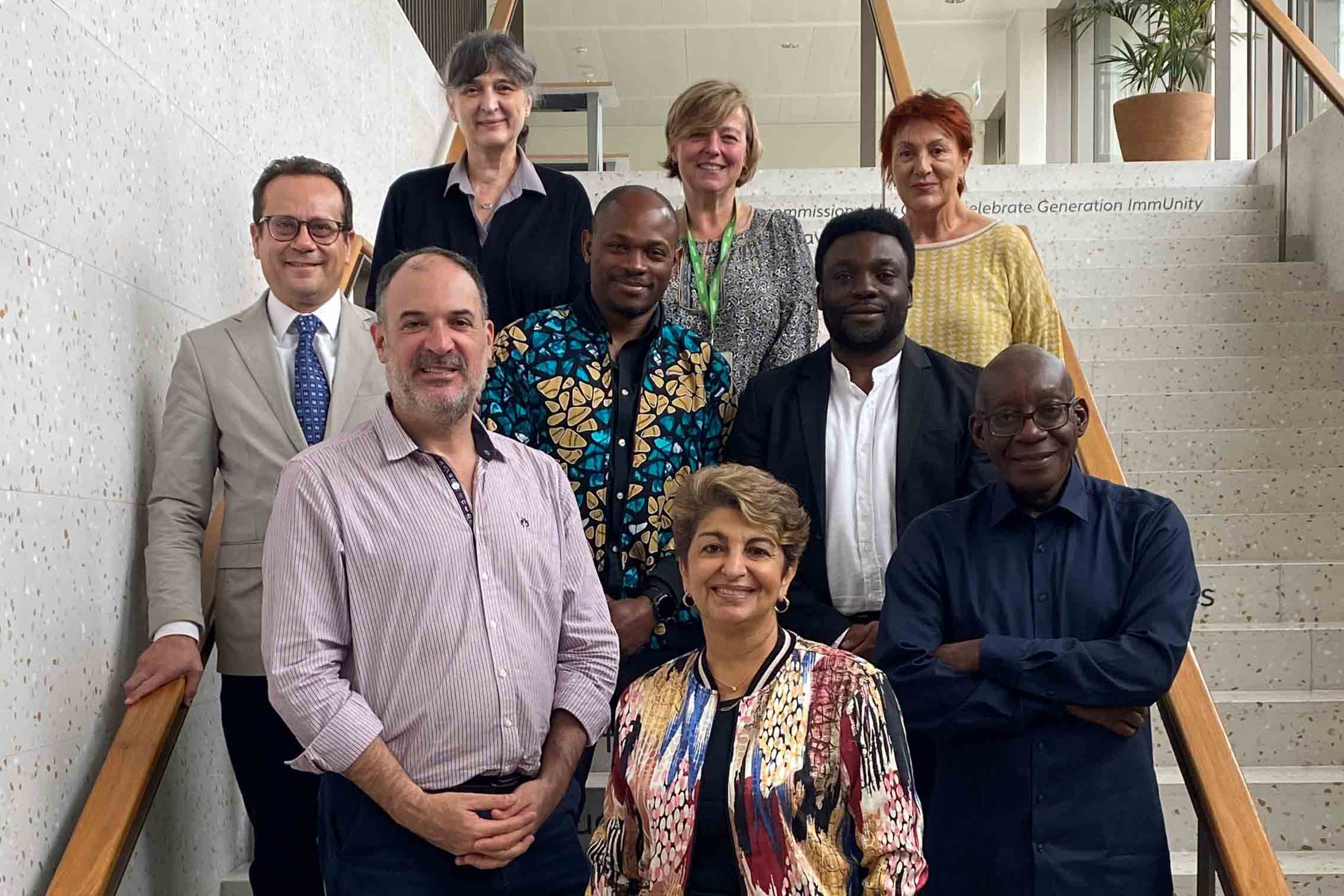
The IRC consists of independent experts with extensive experience across immunisation, public health, health systems, programme implementation, epidemiology, finance and related disciplines.
IRC members are selected through an open and transparent recruitment process and appointed by the Gavi Board. Recruitment opportunities are advertised periodically through public calls for experts on the Gavi website. Members serve terms of up to three years and may serve a maximum of three consecutive terms. Further information on member selection, appointments and governance arrangements is available in the IRC Terms of Reference.
IRC leadership
Chair: Dr Rana Hajjeh
Dr Rana Hajjeh, a physician, epidemiologist and global public health leader, was appointed Chair of Gavi's IRC by the Board in July 2026. With more than 30 years of experience in immunisation, infectious diseases and global health, she has held senior leadership positions at the Population Council, WHO and CDC, and previously led the Gavi-funded Hib Initiative. Dr Hajjeh is supported by Dr Benjamin Nkowane as Vice-Chair of the IRC.
Vice-Chair: Dr Benjamin Nkowane
Areas of expertise
Collectively, IRC members bring expertise in:
- Immunisation programmes
- Vaccine-preventable diseases
- Epidemiology and disease surveillance
- Public health and primary healthcare
- Health systems strengthening
- Implementation and programme management
- Supply chain and logistics
- Financial and economic analysis
- Gender, equity and inclusion
- Monitoring, evaluation and learning
IRC consolidated reports and lessons learned
Following selected review cycles, the IRC publishes consolidated observations and lessons learned from its reviews. These reports highlight common strengths, challenges, emerging trends and recommendations that may assist countries and partners in developing high-quality applications.
Frequently asked questions (FAQs)
What is the Independent Review Committee (IRC)?
The Independent Review Committee (IRC) is an independent and impartial group of experts appointed by the Gavi Board. It assesses eligible funding applications against Gavi policies, programme requirements and strategic priorities, and provides recommendations to support funding decisions.
What does the IRC do?
The IRC reviews funding requests submitted to Gavi and assesses their technical soundness, strategic alignment, feasibility, sustainability and potential public health impact. It advises on how Gavi investments can achieve the greatest impact and contribute to the goals of the Gavi strategy.
Is the IRC independent from Gavi?
The IRC is established to operate as an independent and impartial group of experts. Its review process is structured to protect that independence while allowing exchanges with the Gavi Secretariat, Alliance partners and, where appropriate, country representatives.
Who appoints IRC members?
IRC members are appointed by the Gavi Board on the recommendation of the Governance Committee. Selection is conducted through an open and transparent process.
What expertise do IRC members have?
IRC members collectively bring expertise relevant to Gavi-supported programmes, including routine immunisation, campaign management, health service delivery, health systems strengthening, equity, epidemiology, disease control, infectious diseases, surveillance, diagnostics, supply chain and logistics, financial and budget analysis, sustainability and transition.
How are IRC members selected?
Selection considers competence and independence, commitment and availability, past performance where available, absence of conflicts of interest, and geographical and gender diversity. Members must be able to act independently, ask relevant questions, evaluate evidence and maintain high ethical standards.
How long do IRC members serve?
IRC members are appointed for terms of up to three years and may serve a maximum of three consecutive terms. After reaching the term limit, a member is not eligible to serve on the IRC for at least one year, after which the former member may be eligible to join the IRC pool again.
What types of funding requests does the IRC review?
The IRC advises on country and partner plans and programmes for new vaccine support, extensions, health systems strengthening, other cash support, technical assistance at global, regional and country level, and other types of Gavi support.