

Learning and Performance Management (LPM)
Learning and Performance Management (LPM)
Improving health worker performance and health outcomes.
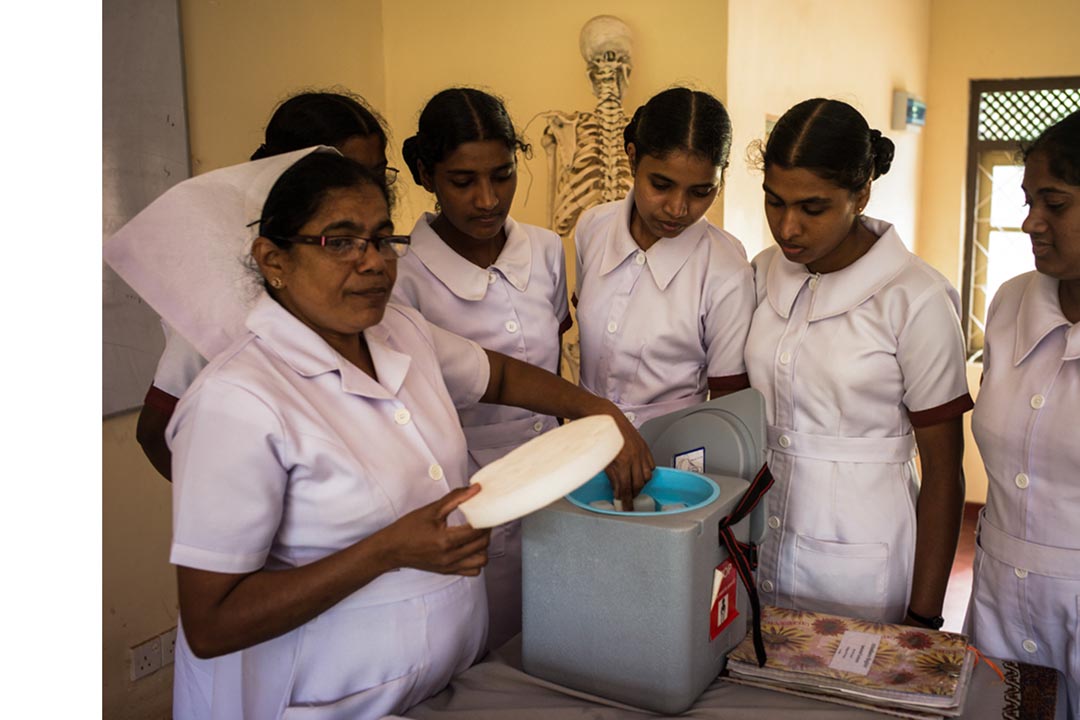
What is LPM?
Learning and Performance Management (LPM) is a term that includes any strategy to help health workers (HW) improve and maintain their performance. When HW perform well, they're providing high-quality services, which is crucial for increasing the likelihood of desired health outcomes.
LPM strategies could focus on the "micro" level (e.g. training or supervision for staff at service delivery points) or broader "macro" level systems issues (e.g. policy). Gavi, the Vaccine Alliance aims to support countries in implementing evidence-based LPM approaches that are tailored to their unique needs and context.
Why is strengthening LPM important?
Improved health outcomes
Globally, 1.5 million people lose their lives to vaccine-preventable diseases every year, and 25 million children are under-immunised. In Gavi-supported countries in 2021, there were 12.5 million "zero-dose" children who have not received even a single vaccine shot. Reaching these missed children and their communities is only possible if HW are skilled and well-supported.
Motivated health workers
The goal of putting HW needs at the centre of LPM is to reinforce their competence, and to improve their motivation, performance and retention.
Better value for money
Global health organisations’ current large investments in traditional lecture-style classroom training and supervision have not had the expected impact on HW performance. Better value for money is achieved through a combination of the more effective LPM approaches described below.
How can LPM be strengthened?
Understand the context
Conduct a needs assessment to identify areas of improvement regarding HW performance; examine existing data; and determine the root causes. Additionally, mobilise existing resources and partners that can support these areas. Based on this analysis, develop an LPM strategy, and select the most suitable approaches and solutions for the context to address the identified areas of improvement.
Combine approaches
Multifaceted strategies that combine training with other interventions, such as supervision or group problem-solving, have greater effects on HW performance than these interventions in isolation. Providing the basics, such as equipment and supplies, is essential, but this should be complemented by interventions shown to improve HW performance. Training is most effective when conducted in the workplace, integrating clinical practice; but there are other effective delivery methods (e.g. self-paced digitally supported, peer-to-peer learning) . Supervision is more effective when supervisors themselves receive supervision; participate in problem-solving with HW; are trained in mentoring; and provide mentorship to their staff.
Carefully consider digital solutions
During the COVID-19 pandemic, the use of digital technology for LPM increased exponentially. However, the effects of digital interventions on HW performance have been mixed, often being small to modest. The decision on whether and how to use digital interventions should be based on evidence of effectiveness, suitability for the context and cost; and all interventions should be monitored.
Monitor for impact
For any LPM strategy, it is important to monitor HW performance and use the results to determine if the intervention needs further adaptation for greater impact. Conduct regular monitoring and evaluation to inform LPM priorities, and choose simple indicators that can be measured during routine supervision visits.
Available resources
For identifying opportunities to improve HW performance:
For evidence:
- Transforming Learning and Performance Management for Immunization Health Workers
- The Health Care Provider Performance Review, evidence on the effectiveness of different interventions
For evaluating solutions:
- Solution provider report - Assesment of ten solutions
- Quality Assessment Tool – Tool to support assessment of specific LPM solutions against the five guiding principles
For more information, one-page resource:
Guiding principles
These five guiding principles serve as the foundation for impactful programmes to strengthen LPM and improve HW performance:
Impactful
Use effective evidence-based approaches that are monitored and evaluated for impact on HW performance and evolve based on results.
Country-driven
Implement context-appropriate approaches that align with national priorities and are driven by national stakeholders.
Sustainable
Implement maintainable and adaptable LPM approaches; encourage country ownership and buy-in for better sustainability.
Learner-centric
Put HW at the centre; select and adapt approaches that reinforce learners’ motivation, confidence and competence.
Digitally supported, when appropriate
Carefully consider digital LPM approaches when they are contextually appropriate, based on needs and evidence; and do not burden HWs unnecessarily.
FAQ
I. General questions on LPM
What is Learning and Performance Management (LPM)?
LPM is a term that includes any strategy to help health workers (HW) improve and maintain their performance. LPM strategies could focus on the “micro” level (e.g. training or supervision for staff at service delivery points) or broader “macro” level systems issues (e.g. policy). Gavi, the Vaccine Alliance aims to support countries in implementing evidence-based LPM approaches that are tailored to their unique needs and context. More strategic LPM will improve the quality of services and lead to better population health outcomes.
What do we mean by health worker performance?
HW performance means how well vaccinators, other Expanded Programme on Immunization (EPI) staff and the staff of other health programmes adhere to national guidelines or otherwise work in ways that help achieve programmatic objectives. EPI examples include: how health workers (HWs) interact with patients (e.g. counseling that encourages caregivers to return for additional doses); safely administering vaccines; and broader programmatic actions (e.g. using data to identify zero-dose children; effective microplanning of vaccination outreach). More generally, when HWs perform well, they are providing high-quality services. Quality of care is the degree to which health services for individuals and populations increase the likelihood of desired health outcomes. High-quality care should be effective, safe, people-centred, timely, equitable, integrated and efficient.
We acknowledge that insufficient numbers of HW is a serious human resources challenge in many countries. However, LPM focuses on improving performance of current HW staff in your country.
Who is the target group for LPM?
LPM can be designed for any health workers (HW). The focus of LPM efforts to date has been on the professional and legally recognised frontline health workers (FHW) such as nurses, midwives, medical doctors and health workers responsible for the delivery of vaccines. There are differences when considering LPM strategies for this group compared to community health workers (CHW) or in-office personnel.
Why should we rethink LPM approaches?
To reach national goals, keep health systems functioning efficiently and improve quality of care, it is critical that health workers receive continuous learning and enhance their skills amid ever-changing health challenges. With more effective LPM, it is possible to use money and time more effectively, keep health workers more motivated and reach better health outcomes.
What is the difference between an LPM approach and an LPM digital solution?
LPM approaches are specific interventions to improve health worker performance (e.g. blended learning, group-based problem-solving, supportive supervision, mentorship).
LPM digital solutions are services, products or technology platforms that support learning and performance efforts; and are maintained by a specific solution provider (e.g. learning management system, decision-support mobile application, proprietary mobile application).
Who has been working on LPM?
A working group comprising experts from Gavi, the Vaccine Alliance; its founding partners (WHO, UNICEF, Bill & Melinda Gates Foundation, World Bank); the US Centers for Disease Control and Prevention; and the Global Fund to Fight AIDS, Tuberculosis and Malaria provided inputs and contributions to the resulting vision, strategy and recommendations to improve HW performance.
Where to look for more information?
For more information, click here for “Available resources”, and see Gavi Programme Funding Guidelines.
2. How does LPM relate to other topics?
How does LPM link to SDGs?
With the ever-changing health challenges, effective LPM is crucial in achieving Sustainable Development Goal (SDG) 3 of Ensure healthy lives and promote well-being for all at all ages. LPM is directly linked to SDG 3.8, Achieve universal health coverage, including financial risk protection, access to quality essential health-care services and access to safe, effective, quality and affordable essential medicines and vaccines for all, and indirectly to many others.
How does LPM align with immunisation programmes? How is LPM linked to zero-dose targets?
LPM can support any programme by improving quality of care, motivating health workers, and providing better value for money. More effective LPM approaches means improved health worker immunisation practices (e.g., effective counselling of caregivers, and safe administration of immunisation doses), as well as improved data use, planning, and community engagement to reach zero-dose children and their communities.
How does LPM link to LMC?
LPM is directed towards frontline health workers, whereas Leadership, Management and Coordination (LMC) aims to strengthen national immunisation teams, coordination forums, and technical advisory groups. LPM approaches are focused on supporting improved health worker performance and may also be applied within LMC efforts aimed at a different set of skills focused on leadership and management.
How does LPM link to CPD?
Continuing professional development (CPD) is a nationally driven process to ensure health workers maintain and improve their professional skills. LPM efforts should link to health worker CPD goals and requirements. LPM focuses on how HW learning and performance will be delivered, and which evidence-based approaches and solutions to use in each context.
How is LPM related to the broader topic of the Human Resources for Health (HRH)?
LPM is focused on improving health worker (HW) performance (e.g., better counselling, better microplanning for outreach activities). HRH includes HW performance, but also other health work force issues, such as HW production, deployment, and retention. LPM and HRH are linked, as HW performance can sometimes depend on having enough HWs. We acknowledge that insufficient HWs is a serious challenge in many countries. However, LPM focuses on improving performance of HWs that currently exist in your country. LPM approaches can be effective even with HW shortages. Moreover, some LPM approaches may strengthen HRH more broadly.
3. Country plans and action-oriented questions
How do I start working with countries to integrate quality LPM into the grant applications and national plans?
- The process of strengthening LPM should begin with a situation analysis/needs assessment to identify: a) areas of health worker (HW) performance (and broader programme performance) that need improvement; b) the causes of those areas of concern; c) existing resources, partnerships, data, and tools (including digital interventions) that could help address the areas of concern; and d) indicators of HW performance that could be monitored to assess how well improvement strategies have addressed the areas of concern (see the fourth sub-bullet, below). There are comprehensive approaches for conducting a situation analysis such as WHO’s methodology, however, a lighter approach that focuses on HW performance issues is also a reasonable option.
- Programme managers should not attempt to solve all problems at once. Begin with a few issues that are in the programme’s sphere of influence and programmatically important. When those problems are solved, move on to the next set of issues. Problems that transcend EPI (e.g. a country-wide shortage of HWs) should be addressed by engaging higher levels of the Ministry of Health hierarchy, and health and development partners.
- When possible, strategies to improve HW performance should build on what currently exists (e.g. routine supervision, information systems, community networks, NGOs, and other partnerships).
- The effects of any strategy should be monitored so that managers know how well it works. Monitoring data could be used to adapt strategies to local conditions and to facilitate learning as implementation proceeds, with the aim of increasing effectiveness.
What are the foundations for impactful programmes? What are the Guiding Principles?
We recommend that programmes apply the following five guiding principles.
- Use effective, evidence-based interventions (see evidence summary below) that are monitored for accountability and adaptation
- Have country-driven decision-making for interventions that are tailored to country contexts
- Pivot away from heavily donor-funded programmes and towards sustainable, country-resourced programmes
- Co-create interventions with health workers and other end users
- Consider carefully whether and how to use digital interventions
Learn more from Transforming Learning and Performance Management for Immunization Health Workers: A New Vision and Strategic Direction
What approaches are effective? Which approaches are evidence-based and should be increased?
- Providing printed information or job aids to health workers (HWs) as a sole strategy is unlikely to substantially change performance.
- Information and communication technology (i.e. digital interventions) might lead to moderately large improvements or no improvement, but typically has small to modest effects.
- Training only or supervision only (i.e. as a sole strategy) might produce large improvements or no improvement, but both strategies generally have moderate effects. An analysis of the highest quality studies of group (e.g. classroom-based) in-service training found only a modest effect. The effect of training tends to wane over time. It might be more effective to combine training with other strategies, such as supervision or group problem-solving.
- Training tends to be more effective when it is conducted at the site where HWs usually work and when it includes clinical practice.
- Supervision tends to be more effective when supervisors receive supervision and when supervisors participate in problem-solving with HWs. Supervision is likely to be more effective when supervisors provide mentorship to their supervisees (i.e. serve as teacher, role model, adviser, and sponsor).
- Group problem-solving only (i.e. as a sole strategy) might bring about large or small improvements in HW performance, but moderate effects are more typical. The effects tend to increase over time.
- Multifaceted strategies that strengthen infrastructure (e.g. providing commodities), supervision, other management techniques (e.g. HW group meetings), and training; and the strategy of group problem-solving plus training might result in very large or only modest improvements, but such multifaceted strategies tend to have large effects. The large effects of group problem-solving plus training were stable over time (i.e. no discernable increase or decrease, on average).
- Financial incentives for HWs, and health system financing strategies and other incentives (e.g. health insurance) might lead to large or small improvements, but these incentives typically have modest to moderate effects.
- The effects of regulation and governance strategies in isolation are unknown. When combined with other strategy components, they tended to have large effects; however, it is difficult to know how much these improvements were due to the effect of other strategy components.
- Programmes might want to consider the influence of context on strategy effectiveness. Certain strategies (e.g. group problem-solving, and training with either patient support or supervision) might be more effective in areas with higher levels of resources (e.g. urban areas). Other strategies (e.g. training only or supervision plus training) might be more effective in inpatient settings.
Other approaches that have some degree of promising evidence related to learning outcomes include blended learning, mentorship (virtual or in-person), mobile-social learning, eLearning, and point-of-care decision-support tools.
What are the Quality Assessment Criteria?
The Quality Assessment Criteria and Tool can be used to guide a structured assessment of a specific LPM digital solution against the five guiding principles (impactful, country-driven, sustainable, learner-centric, digitally supported). Each principle has one to four standards, under which the level of assessment criteria will be evaluated. Based on the evaluation and final score of the solution, it will be easier to select appropriate LPM solutions. See more and access the tool here.
What LPM approaches are preferred by the health workers?
Health workers (HWs) ranked workplace-based learning, clinical practice rotations, and decision-support tools as the top three preferred learning approaches out of nine choices. They reported internal and external supportive supervision and pay for performance as acceptable. Health workers reported that older users prefer in-person training and audit-style supervision, and that younger users are more interested and willing to engage in technology-supported LPM. Self-study methods were the least preferred. Note that there is significant variation in country context for preferred LPM approaches, aligned with digital maturity, the maturity of decentralisation, and the health professions’ regulation maturity in the country for continuing professional development policies.